Why Does My House Smell Like a Sewer? Common Causes of Foul Plumbing Odors
A foul plumbing odor inside a home or business is more than an unpleasant nuisance. Sewer-like smells can indicate something as simple as an unused fixture with a dry P-trap or something more serious such as a damaged vent, deteriorated drain piping, failed toilet seal, or problem within the building sewer. The important part is determining where the odor is entering the building before assuming that every sewer smell means the underground sewer line has failed. Plumbing drainage systems are designed to move wastewater out of the building while preventing sewer gases from traveling in the opposite direction. Water-filled traps, properly installed vent piping, sealed drainage connections, and a functioning sewer system all work together to accomplish this. When one of those protections is lost, odors that normally remain inside the drainage system can enter occupied areas.
The P-Trap Is Your First Defense Against Sewer Gas
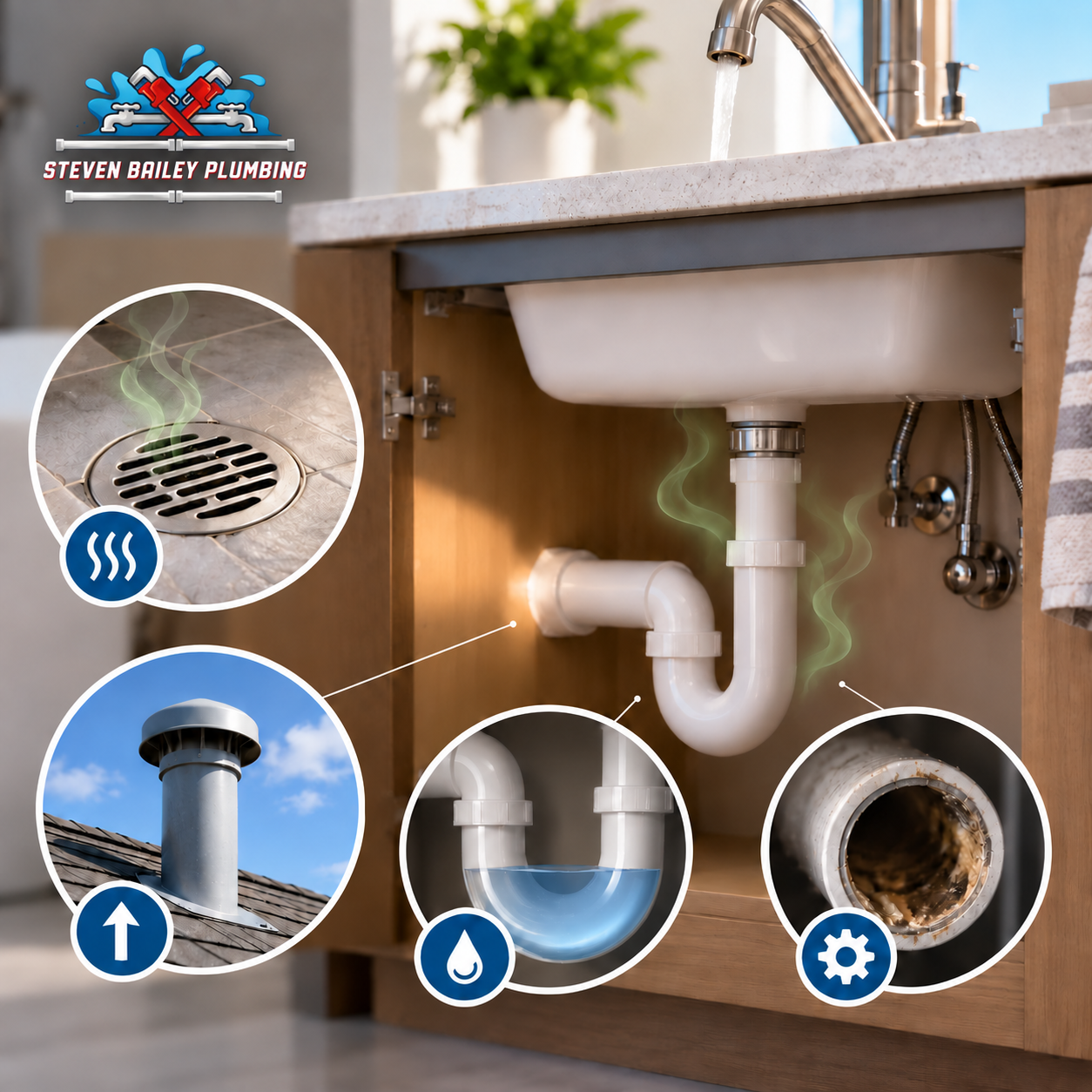
Nearly every properly installed plumbing fixture has a trap located between the fixture and the drainage system. Beneath a sink, this is usually easy to recognize as the curved section of piping commonly called a P-trap. Showers, tubs, floor drains, and other fixtures also have traps, although they are often concealed below the floor. The curved portion of the trap retains a small amount of water after the fixture drains. That water creates a physical seal between the room and the sanitary drainage system. Wastewater can flow through the trap when the fixture is used, but the remaining water prevents sewer gases from freely traveling back through the drain opening. If that water disappears, the protection disappears with it. A completely dry trap essentially becomes an open pathway between the interior of the building and the drainage system.
Unused Fixtures Are One of the Most Common Causes of Drain Odors
A bathroom sink or shower used every day continually replenishes its trap seal. Problems are much more common with plumbing fixtures that sit unused for weeks or months. Guest bathrooms, basement showers, utility sinks, laundry drains, floor drains, bar sinks, and fixtures in vacant properties are common examples. Water naturally evaporates from a trap over time. Eventually the water level can become low enough that sewer gas passes through it. The resulting odor can sometimes be surprisingly strong even though there is nothing mechanically wrong with the drain itself. The first remedy is also one of the simplest plumbing solutions available: add water. Run the faucet, shower, or tub for a short period, or carefully pour water into an unused floor drain. Once the trap fills again, the water seal may immediately eliminate the pathway that allowed the odor into the room.
Do Not Forget About Floor Drains
Floor drains are frequent sources of mystery odors because homeowners may not even realize one is present. They can be found in garages, basements, mechanical rooms, laundry rooms, commercial kitchens, boiler rooms, utility areas, and other spaces where emergency drainage may be required. Unlike a frequently used sink, a floor drain may go months without receiving meaningful water flow. If a room develops an unexplained sewer odor, the floor drain should be one of the first places investigated. Adding water to the drain and allowing time for the trap to refill may resolve the problem if evaporation was the cause. If the odor disappears but repeatedly returns after the trap dries again, the drain may benefit from a more permanent method of maintaining the trap seal.
Trap Primers Can Help Keep Floor Drains From Drying Out
A trap primer is a device designed to periodically introduce a small amount of water into a trap so the water seal does not disappear during long periods of inactivity. Trap primers are particularly useful for floor drains and other drainage fixtures that need to remain protected from sewer gas but do not receive regular fixture discharge. Depending on the plumbing configuration, a trap primer may operate mechanically, through pressure changes in a water line, or through another approved method designed to replenish the trap. The appropriate solution depends on the existing piping and accessibility of the drain. For a floor drain that repeatedly develops odor because the trap evaporates, installing or repairing a trap primer can provide a much better long-term solution than expecting someone to remember to manually pour water down the drain every few weeks.
What If Adding Water Does Not Eliminate the Smell?
If water is added to every suspected trap and the odor remains, the source may be somewhere else in the drainage system. Persistent sewer odors warrant a more systematic inspection because sewer gas can escape through failed connections, damaged piping, vent problems, toilet seals, or other openings that are not visible from the fixture itself. The location of the smell can provide useful clues. An odor concentrated beneath a sink may point toward the trap, drain connection, or piping inside the cabinet. A smell around the base of a toilet may involve the toilet-to-drain connection. An odor concentrated in an attic, wall cavity, or upper floor may suggest a venting issue. A smell appearing at several fixtures at once may indicate a larger drainage or sewer problem.
Broken or Disconnected Plumbing Vents Can Release Sewer Gas
The plumbing vent system is a critical but mostly invisible part of a building’s drainage system. Vent piping allows air to enter and leave the drainage system so wastewater can flow properly while helping maintain the water seals inside fixture traps. Vent pipes normally terminate above the roof where plumbing gases can safely discharge outdoors. If a vent pipe is cracked, disconnected, improperly terminated, or damaged inside the building, sewer gases can escape into wall cavities, attics, ceilings, or occupied rooms instead of being carried safely outside. Because much of the vent system is concealed, a damaged vent can create a persistent odor without producing an obvious water leak. Vent problems sometimes become noticeable after remodeling, roofing work, plumbing alterations, or construction where existing piping was moved or disturbed. Older piping can also deteriorate over time. Repair may require locating the affected section, opening the necessary access area, and replacing or reconnecting the damaged vent piping.
A Blocked Vent Can Also Affect P-Traps
Not every vent problem involves a broken pipe. If a drainage system cannot receive air properly, pressure changes inside the piping can interfere with fixture traps. In some situations, water can be pulled from a trap during drainage, reducing the trap seal and allowing sewer odors to enter afterward. Gurgling drains, bubbling toilets, unusual drain noises, or water movement in one fixture when another fixture drains can be signs that the drainage and vent system should be evaluated. These symptoms can also be associated with drain restrictions, which is why diagnosis is important before assuming the vent is the cause.
Dirty or Partially Clogged Drains Can Smell Without a Dry Trap
Not every foul drain odor is actually sewer gas. Kitchen sinks, bathroom sinks, shower drains, and other fixtures can accumulate soap residue, grease, hair, organic material, food particles, and other debris. Bacteria growing within that buildup can create unpleasant odors even while the P-trap remains full of water. If a drain is both slow and foul smelling, the piping may need to be cleaned rather than simply deodorized. Pouring fragrance products into the drain may temporarily mask the smell without removing the material causing it. Recurring odors accompanied by slow drainage, backups, or gurgling should be treated as a drainage problem rather than a housekeeping issue. Steven Bailey Plumbing & Rooter provides professional clogged drain repair for sinks, tubs, showers, floor drains, and other drainage problems. For broader main-line and sewer concerns, our drain cleaning and sewer services include professional cleaning and diagnostic options when the problem extends beyond a single fixture.
Broken Drain Piping Can Allow Odors Into the Building
A drainage pipe does not need to be completely separated to create an odor problem. Cracks, deteriorated fittings, loose connections, damaged cast iron, failed joints, or improperly assembled piping can allow drainage gases to escape while producing little or no visible wastewater leakage. This can be particularly difficult to diagnose when the affected piping runs behind a wall, above a ceiling, through a crawlspace, or beneath a floor. Odor may travel through framing cavities and emerge somewhere other than the actual failure point. When defective drainage piping is identified, the appropriate solution is generally to repair or replace the affected pipe rather than attempt to conceal the odor. A properly sealed drainage system should keep both wastewater and sewer gases contained within the piping.
A Failed Toilet Seal Can Produce a Sewer Odor
The connection beneath a toilet is another potential source of sewer odor. The toilet must form a reliable seal to the drainage system at the floor connection. If that seal fails, sewer gas may escape around the base even if wastewater is not visibly leaking onto the floor. A toilet that rocks, moves, has been improperly installed, or has experienced previous work around the flange deserves closer inspection when an odor appears nearby. Simply adding water to the toilet bowl will not correct a failed seal beneath the fixture. Our bathroom plumbing services include toilet and fixture troubleshooting when the source of an odor appears to be associated with bathroom plumbing rather than the main sewer.
Sewer Line Damage Can Cause Persistent Odors
While a dry P-trap is one of the easiest explanations for a sewer smell, persistent odors should not automatically be dismissed as a minor fixture issue. Cracked sewer piping, failed joints, damaged laterals, deteriorated drain lines, or other defects can allow sewer gases to escape into crawlspaces, garages, yards, or portions of the building. Sewer problems become more likely when the odor is accompanied by repeated main-line stoppages, multiple slow drains, toilets that bubble or gurgle, wastewater backing up into lower fixtures, or a history of root intrusion and sewer repairs. In these circumstances, simply adding water to a trap will not correct the underlying problem. Our sewer line repair and replacement services are designed to identify damaged sewer piping and determine an appropriate repair strategy based on the actual condition and location of the problem. Camera inspection and locating can often provide valuable information before a repair is recommended.
Dry Traps in Vacant Homes and Properties
Vacant houses, rental units between tenants, seasonal properties, and buildings undergoing renovation are especially susceptible to dry traps. Even when the plumbing system itself is functioning normally, weeks or months without fixture use can allow multiple traps to evaporate at approximately the same time. The result can be a strong building-wide sewer odor that makes the situation appear much more serious than it actually is. Before assuming the sewer has failed, water should be restored to every fixture trap. Run sinks, flush toilets, operate tubs and showers, and add water directly to floor drains or other fixtures that do not receive regular use. If the smell disappears shortly afterward, evaporation was likely involved. If a property will remain vacant for an extended period, periodic plumbing maintenance or permanent trap-primer solutions for appropriate drains can reduce the likelihood of the problem returning.
Mechanical Rooms and Water Heater Areas Are Easy to Overlook
Mechanical rooms may contain floor drains, condensate drains, indirect waste connections, utility sinks, boilers, water heaters, and other equipment. Because these rooms are not always occupied, a dry floor drain can remain unnoticed until the smell spreads into another part of the building. When investigating an odor, check utility and mechanical spaces even if the smell appears stronger elsewhere. Air movement through doors, hallways, stairwells, and HVAC systems can carry odors away from the actual source.
When a Sewer Odor May Actually Be a Hidden Leak
Musty, stagnant, or foul odors are sometimes mistaken for sewer gas when the actual problem is moisture from a concealed plumbing leak. Water trapped behind walls, beneath flooring, or inside cabinetry can support microbial growth and produce a persistent odor that does not disappear when traps are filled. If the property also has water staining, damp flooring, unexplained moisture, unusual water usage, or meter movement when fixtures are off, a hidden water leak should be considered. Our leak detection services can help narrow down concealed plumbing problems before unnecessary areas are opened.
Simple Steps to Try Before Calling a Plumber
If the odor appears to be coming from a fixture that has not been used recently, begin by restoring water to the trap. Run the fixture or carefully add water to the drain and allow some time to determine whether the odor improves. Check guest bathrooms, basement fixtures, utility sinks, floor drains, laundry areas, garages, and other infrequently used plumbing fixtures rather than focusing only on the room where the odor is strongest. If the smell returns repeatedly because the same trap continues drying out, a trap primer or another appropriate method of maintaining the trap seal may be worth considering. If the odor remains after the traps have been filled, or if the property also has drainage problems, gurgling, backups, leaks, or visible pipe deterioration, further investigation is appropriate.
Do Not Simply Cover Up a Persistent Sewer Smell
Air fresheners, cleaners, and deodorizing products may temporarily make a room smell better, but they do not restore a missing trap seal, reconnect a broken vent, repair deteriorated drain piping, or correct a damaged sewer line. Sewer odors that persist or repeatedly return should be treated as a symptom that has a physical source somewhere in the plumbing system. Finding that source is the important part. Sometimes the solution is nothing more than adding water to an unused floor drain. In other situations, the correct remedy may be installing a trap primer, repairing vent piping, cleaning a restricted drain, replacing a failed fixture connection, or repairing damaged sewer piping.
Professional Diagnosis for Recurring Plumbing Odors
Steven Bailey Plumbing & Rooter provides drain, sewer, and plumbing diagnostic services throughout San Francisco, Marin County, and San Mateo County. When a sewer or drain odor cannot be traced to an obvious dry trap, we can evaluate the accessible plumbing and determine what additional investigation may be appropriate. The objective is to identify the actual pathway allowing the odor into the building rather than simply treating the smell. Whether the solution involves replenishing a trap, installing a trap primer, repairing damaged piping, clearing a drain, correcting a vent condition, or addressing a deteriorated sewer line, the repair should address the underlying cause.
Smoke Detection and Plumbing Smoke Testing
When the source of a sewer odor is not obvious, plumbing smoke testing can help locate hidden leaks or openings in the drain, waste, and vent system. A controlled, non-toxic test smoke is introduced into the plumbing system so escaping smoke can reveal cracked vent piping, failed joints, loose fittings, damaged drain lines, or other concealed pathways where sewer gas may be entering the building. Smoke testing can be especially useful when odors are intermittent or coming from areas where the piping is hidden behind walls, ceilings, or floors.
Schedule Plumbing Service
If you have a persistent sewer smell, foul drain odor, recurring dry floor drain, or another unexplained plumbing odor, contact Steven Bailey Plumbing & Rooter. We can evaluate the drainage system and help determine whether the problem originates at a fixture, trap, vent, drain line, or sewer.