Why You Should Rinse Dishes Before Using the Dishwasher – How to Prevent Clogs
Loading the dishwasher is one of the most routine household chores, yet a surprisingly simple decision can influence how well the appliance operates and how much unwanted debris enters your kitchen drainage system. Should you rinse every dish before loading it, or is it better to put dishes directly into the dishwasher? Many homeowners were taught to rinse plates, bowls, and utensils thoroughly before starting a wash cycle. Others place dishes into the machine without removing leftover food, assuming that the dishwasher will handle everything. Neither approach is necessarily ideal. The best practice for most modern dishwashers is to remove solid food scraps before loading the appliance without unnecessarily washing every dish under running water. Scraping plates into the trash or an appropriate food-waste container helps prevent larger pieces of food from collecting inside the dishwasher, obstructing its filtration system, or entering the kitchen drain. At the same time, avoiding excessive pre-rinsing conserves water and allows the dishwasher to perform the cleaning it was designed to accomplish. At Steven Bailey Plumbing & Rooter, we regularly encounter kitchen drainage problems involving grease, accumulated food residue, deteriorated piping, and other restrictions. Although dishwasher-related clogs can originate in different parts of the appliance or connected plumbing, good kitchen habits can help reduce preventable debris accumulation. Understanding how dishwashers drain, what materials should be kept out of them, and when to clean the filter can make a meaningful difference in long-term plumbing maintenance.
Should You Rinse Dishes Before Putting Them in the Dishwasher?
For most modern household dishwashers, thorough pre-rinsing is unnecessary. Many newer appliances incorporate filtration systems, improved spray patterns, specialized detergents, and soil-sensing technology designed to remove ordinary food residue. ENERGY STAR recommends scraping leftover food from dishes rather than rinsing them extensively before loading. This approach reduces unnecessary water and energy consumption while allowing the appliance to perform its normal cleaning cycle. However, there is an important distinction between leaving a little sauce on a plate and allowing large amounts of food to enter the dishwasher. A plate with a thin layer of pasta sauce, for example, can usually be placed directly into a properly maintained modern dishwasher after the leftover pasta has been removed. A plate carrying several large pieces of meat, bones, vegetable scraps, and a substantial quantity of leftover food should be scraped thoroughly before loading. The objective is not to make the dishes appear clean before they enter the dishwasher. It is to remove solid waste that does not belong in the appliance while leaving ordinary washable residue for the machine to handle. Older dishwashers, unusually heavy food deposits, and model-specific manufacturer instructions may justify additional preparation, but homeowners should not assume that running every plate under the faucet is necessary.
How Food Scraps Contribute to Dishwasher Clogs
A dishwasher is designed to circulate water and detergent across dishes, remove food residue, and discharge wastewater through its drainage system. While most appliances are capable of handling ordinary food particles, they are not intended to operate as garbage disposals. Large food scraps, fruit pits, bones, labels, toothpicks, and other foreign materials can collect in the filter or interfere with the drain pump and related components. During operation, food particles are washed away from dishes and carried into the dishwasher’s filtration area. Depending on the design, a removable filter, screen, or internal separation system captures larger debris while allowing water to circulate. Some dishwashers incorporate food-processing or grinding mechanisms, but their capabilities vary considerably. Regardless of the design, a dishwasher should not be used to dispose of substantial quantities of leftover food. When excessive debris accumulates, several problems can develop. Food particles may restrict filtration, interfere with proper circulation, contribute to unpleasant odors, or obstruct the drain pump. The appliance may leave dirty water behind after a cycle, display a drainage-related error, or deposit food particles back onto otherwise clean dishes. In some cases, the problem is localized within the dishwasher, while in others, the restriction is in the plumbing connected beneath the kitchen sink.
How Dishwashers Connect to Your Kitchen Drain
Understanding the dishwasher’s drainage arrangement helps explain why kitchen sink problems and dishwasher backups sometimes occur together. In many residential installations, the dishwasher discharges through a flexible drain hose connected to a garbage disposal inlet or a suitable dishwasher branch connection on the kitchen sink drainage assembly. Depending on local requirements, the system may include an approved air gap and other protective arrangements intended to reduce the possibility of wastewater flowing back toward the appliance. When the dishwasher pumps wastewater into the drainage system, that water must pass through the connected fittings and branch piping before reaching the building’s larger drainage system. If the kitchen sink drain is partially obstructed by grease, food residue, or another restriction, dishwasher discharge can cause water to rise inside the sink or back up through an improperly functioning drainage arrangement. This is why standing water inside a dishwasher should not automatically be blamed on food collected in the appliance’s filter. A clogged kitchen sink branch drain, improperly routed discharge hose, blocked air gap, or garbage disposal connection problem may produce similar symptoms. Our kitchen plumbing services include evaluating drainage connections, garbage disposals, kitchen sinks, and associated piping to identify the actual source of the problem.
Why Grease and Cooking Oils Are a Bigger Problem Than Most Food Residue
Food scraps are only part of the concern. Grease, fats, and cooking oils are among the most persistent contributors to kitchen drain restrictions. When greasy cookware or dinner plates are washed, some of that material can enter the drainage system along with detergent and hot water. Although liquid grease may move through the piping initially, it can cool, adhere to interior pipe surfaces, and combine with other debris over time. Repeated grease discharge can contribute to gradual buildup, particularly in older pipes or sections where existing deposits already restrict flow. Food particles, soap residue, and other materials may become trapped within these deposits, creating increasingly stubborn obstructions. A dishwasher can contribute to this process when heavily greased dishes are loaded without first removing substantial amounts of fat or cooking residue. For example, a roasting pan containing a noticeable layer of bacon grease should not be placed directly into the dishwasher with the expectation that the appliance will safely dispose of the grease. The better approach is to allow the grease to cool, collect it in a suitable container for disposal, and wipe away substantial remaining residue before washing the cookware according to its care instructions. Hot water and detergent are designed to clean dishes, but they do not make unlimited amounts of grease safe for residential drainage piping. Avoiding unnecessary grease discharge is one of the simplest ways to reduce the potential for recurring kitchen drain problems.
The Proper Way to Prepare Dishes for the Dishwasher
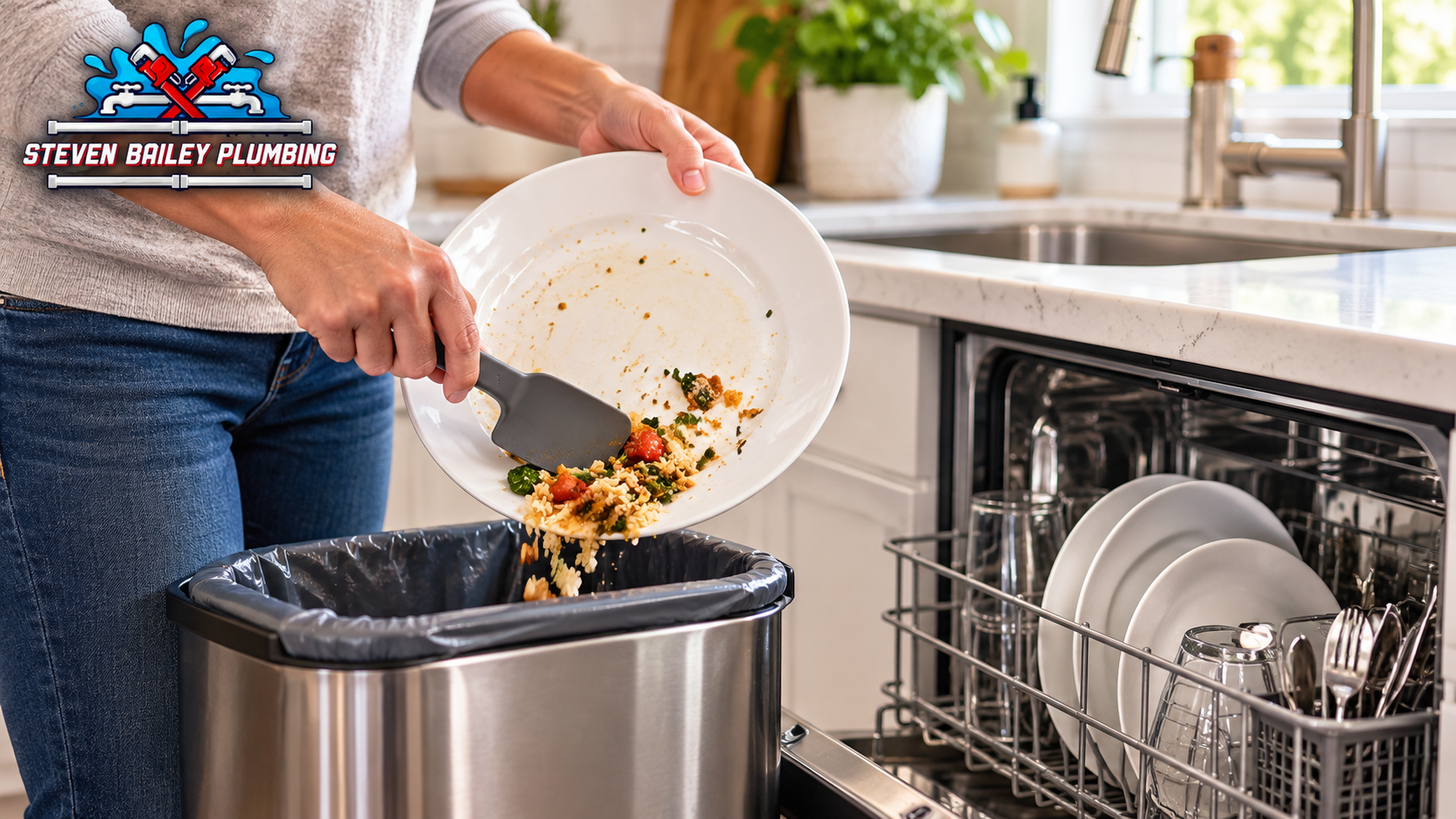
Good dishwasher preparation should be simple and consistent. Homeowners do not need to spend several minutes washing every dish by hand, but they should take a moment to remove food that could interfere with the appliance or accumulate in the plumbing. This can be accomplished with a utensil, rubber scraper, paper towel, or another suitable tool before dishes are placed in the machine.
Remove Large Food Scraps
Scrape uneaten food, bones, seeds, fruit pits, and other substantial material into an appropriate waste container. Rice, pasta, vegetables, and similar leftovers should be removed in quantity rather than deliberately flushed into the dishwasher. A small amount of residue remaining on the dish is generally acceptable for a modern appliance, but accumulated solid waste should be disposed of separately.
Remove Excess Grease
Pouring grease into a kitchen sink or allowing heavy grease deposits to wash into the dishwasher is not an effective disposal method. Collect liquid cooking grease after it cools sufficiently and wipe heavily coated cookware when appropriate. Thin, ordinary cooking residue can generally be handled by the dishwasher, but substantial pools of oil or fat should be removed before washing.
Load Dishes Without Blocking Water Circulation
Proper loading allows detergent and water to reach the surfaces of dishes while permitting spray arms to rotate freely. Large cutting boards, pans, and oversized utensils can interfere with spray-arm movement when positioned incorrectly. Overcrowding also makes it more difficult for the dishwasher to clean and rinse effectively, potentially leaving food deposits behind.
Follow the Appliance Manufacturer’s Instructions
Dishwashers differ in their filtering systems, recommended cleaning cycles, detergent requirements, and maintenance intervals. Always follow the instructions for the specific appliance, especially when using specialized cleaning products or removing internal components. For dishes that may sit for an extended period before washing, consider the appliance’s designated rinse or hold cycle when appropriate rather than repeatedly running water over each plate.
The Importance of Cleaning Your Dishwasher Filter
The dishwasher filter is one of the most overlooked maintenance components in a residential kitchen. In models equipped with a removable filter, the assembly is generally located near the bottom of the dishwasher beneath the lower rack. Its purpose is to capture food debris and other material that could interfere with water circulation, cleaning performance, or the drain system. Over time, trapped material can accumulate within the filter screen and surrounding collection area. A dirty filter may contribute to unpleasant odors, reduced cleaning performance, visible food particles on dishes, or drainage difficulties. Although cleaning frequency varies with appliance design and household use, checking the filter regularly is a worthwhile maintenance habit. When the manufacturer provides a removable, homeowner-serviceable filter, it can generally be inspected and cleaned according to the instructions in the appliance manual. Avoid using sharp tools that could damage the screen or surrounding components, and make certain the filter is reinstalled and secured correctly before operating the dishwasher. Some dishwashers use different filtration or self-cleaning arrangements, so homeowners should never force apart components that are not intended to be removed. A recurring clog, abnormal pump noise, or drainage error that remains after routine filter maintenance may indicate a problem requiring further diagnosis.
Signs Your Dishwasher or Kitchen Drain May Be Clogged
Dishwasher drainage problems are not always immediately obvious. Some begin with small amounts of water remaining in the appliance or a gradual change in cleaning performance. Others become apparent when wastewater enters the kitchen sink or leaks from a connection beneath the cabinetry. Recognizing the symptoms early can help prevent unnecessary appliance operation and additional water damage.
- Standing water: A substantial amount of dirty water remains in the dishwasher after the wash cycle has finished.
- Gurgling sounds: The kitchen sink or connected drainage piping makes unusual noises when the dishwasher discharges.
- Sink backups: Wastewater rises into the kitchen sink during dishwasher operation.
- Persistent odors: Unpleasant smells develop because of trapped debris, grease accumulation, or drainage problems.
- Drainage errors: The dishwasher displays an error or stops operating because it cannot discharge wastewater normally.
- Water under the sink: Loose connections, damaged hoses, or backed-up piping allow water to escape into the cabinet.
If wastewater is backing up through the kitchen sink or dishwasher, avoid repeatedly operating the appliance until the cause has been identified. Repeated discharge into an obstructed drain can worsen an overflow or leak. Where the problem involves the household plumbing rather than an internal appliance component, professional clogged drain repair may be necessary to restore normal drainage.
What About Homes With Garbage Disposals?
Many dishwashers discharge wastewater through a connection on the side of the kitchen garbage disposal. In these arrangements, dishwasher drainage depends partly on the disposal’s outlet and the condition of the downstream sink piping. If the disposal chamber or connected drainage system becomes restricted, wastewater may not drain normally. A garbage disposal can help process limited amounts of suitable food waste, but it should not be treated as a substitute for proper food disposal habits. Excessive quantities of fibrous vegetables, grease, starches, and other difficult materials can contribute to jams or downstream drainage problems. The presence of a garbage disposal also does not eliminate the need to scrape large food scraps from dishes before loading the dishwasher. When installing a new garbage disposal, the dishwasher inlet must be properly prepared and connected if the dishwasher will discharge through the unit. An unopened dishwasher inlet knockout, incorrectly arranged hose, or improper connection can prevent drainage even when the appliance itself is functioning normally. Steven Bailey Plumbing & Rooter provides garbage disposal installation and replacement, including evaluation of the related sink and dishwasher plumbing connections.
How to Prevent Recurring Kitchen Drain Clogs
Preventing kitchen drain clogs requires more than maintaining the dishwasher. The kitchen sink, garbage disposal, dishwasher discharge connection, trap assembly, and branch drain all operate as parts of the same general drainage system. A problem with one component can affect the performance of the others, making consistent household maintenance especially important. Homeowners can reduce avoidable drainage problems by scraping dishes before loading them, keeping substantial grease out of the drain, using the dishwasher according to the manufacturer’s instructions, and inspecting accessible plumbing connections for leaks. Sink strainers should be emptied regularly, and garbage disposals should be operated within their intended limitations. If a kitchen drain begins flowing slowly, early evaluation may help identify developing buildup before it becomes a complete stoppage. For older San Francisco homes, the condition of existing drainage piping can also be an important factor. Aging cast iron piping, improper slopes, accumulated deposits, and previous plumbing alterations may create restrictions that return even when residents maintain good disposal habits. A recurring kitchen drain backup should not automatically be attributed to dishwasher use or household cleaning practices. When appropriate, additional drain evaluation may be necessary to determine whether the piping itself is contributing to the problem.
When to Call a Professional Plumber
Some dishwasher maintenance tasks are straightforward, such as cleaning a removable filter or removing visible food debris. However, problems involving wastewater backing up into the sink, repeated drain stoppages, leaking discharge connections, or damaged plumbing should be addressed before they cause additional complications. If the dishwasher operates normally but wastewater cannot move through the connected kitchen drainage system, the problem may be outside the appliance.Steven Bailey Plumbing & Rooter provides kitchen drain cleaning, garbage disposal service, drainage repairs, and related plumbing diagnostics throughout San Francisco, San Mateo County, and Marin County. Our approach is to identify whether the restriction is located at the sink, garbage disposal, branch drain, or another accessible part of the plumbing system. We can then explain the condition and recommend an appropriate repair or cleaning method. Not every dishwasher drainage issue is a plumbing failure. Internal drain pumps, control systems, sensors, and other appliance-specific components may require a qualified appliance repair technician. Determining whether the problem originates in the appliance or its plumbing connections can help homeowners avoid paying for unnecessary repairs.
Frequently Asked Questions About Dishwasher Rinsing & Drain Clogs
Should I rinse dishes before putting them in the dishwasher?
Most modern dishwashers do not require thorough pre-rinsing. Remove large food scraps, bones, and substantial grease before loading, then allow the dishwasher to clean ordinary food residue. Always follow your appliance manufacturer’s instructions.
Can food scraps clog a dishwasher?
Yes. Excessive food debris and foreign objects can obstruct the dishwasher filter, interfere with drain pump operation, or contribute to restrictions in connected drainage piping. Scraping dishes and maintaining the filter can reduce these problems.
How often should I clean my dishwasher filter?
Cleaning frequency depends on the appliance and how frequently it is used. Inspect the filter regularly and follow the manufacturer’s recommended maintenance schedule. Clean it sooner if you notice visible debris, unpleasant odors, or reduced cleaning performance.
Why does my kitchen sink back up when the dishwasher drains?
A restriction in the garbage disposal, sink drain, or shared branch piping may prevent dishwasher wastewater from draining normally. The air gap or discharge hose arrangement may also require evaluation. The exact cause should be identified before repairs are attempted.
Should I use chemical drain cleaner to unclog my dishwasher?
Do not pour chemical drain cleaners into the dishwasher unless the appliance manufacturer explicitly approves a product for that use. Many drain-cleaning chemicals can damage appliance components or create hazards during servicing. A recurring drainage problem should be diagnosed and corrected using an appropriate method.
Can grease from dishes clog my kitchen plumbing?
Yes. Excessive grease entering the drainage system can cool, accumulate on pipe surfaces, and trap other debris. Remove substantial cooking oils and fats before washing dishes to help reduce buildup in the kitchen drain.
Protect Your Dishwasher and Kitchen Plumbing With Better Habits
A properly functioning dishwasher should make household cleanup easier, not create recurring plumbing problems. For most modern appliances, the best practice is simple: scrape off substantial food scraps, remove excessive grease, load dishes properly, and maintain the dishwasher’s filter according to the manufacturer’s instructions. These steps can help keep unwanted debris out of the appliance while avoiding the unnecessary water consumption associated with washing every dish by hand before starting a cycle.
If your dishwasher drains slowly, your kitchen sink repeatedly backs up, or you suspect accumulated food and grease are restricting your pipes, Steven Bailey Plumbing & Rooter can help evaluate the connected plumbing. We provide professional kitchen drain cleaning, garbage disposal service, and plumbing repairs throughout San Francisco, Marin County, and San Mateo County. Our objective is to restore reliable drainage and provide practical recommendations that help reduce the likelihood of future problems.
Steven Bailey Plumbing & Rooter — Expert Plumbing You Can Trust.